

How to Immigrate to Canada Through Express Entry — Without Costly Mistakes
Thousands of skilled workers apply for Canadian immigration every year through Express Entry.
But many applicants are rejected, delayed, or lose valuable points simply because they misunderstand how the system actually works.
This guide explains how Express Entry works, how CRS scores affect your chances, and what strategies successful applicants use to receive Invitations to Apply (ITA).
Whether you are just exploring Canadian immigration or actively preparing your profile, understanding the Express Entry system is the first step toward building a successful immigration strategy.
What Is Express Entry Canada?
Express Entry is the online system used by the Government of Canada to manage applications for skilled immigration.
Rather than applying directly for permanent residence, candidates first create an Express Entry profile and enter a pool of applicants. Each profile receives a Comprehensive Ranking System (CRS) score based on factors such as:
- Age
- Education
- Work experience
- Language ability
- Canadian work or study experience
- Additional points such as provincial nomination
The government regularly conducts Express Entry draws, inviting the highest-ranked candidates to apply for permanent residence.
Understanding how these points are calculated, and how to improve them, can dramatically improve your chances of success.
Who Is Eligible for Express Entry Canada?
Not everyone can apply through Express Entry.
To qualify, applicants must meet the criteria of at least one of the following programs:
Federal Skilled Worker Program (FSW)
This program is designed for individuals with foreign work experience in skilled occupations.
Typical requirements include:
- At least one year of skilled work experience
- Minimum language proficiency in English or French
- Educational credential assessment (ECA)
Minimum score on the Federal Skilled Worker points grid
Canadian Experience Class (CEC)
This pathway is designed for individuals who already have skilled work experience in Canada.
Requirements typically include:
- Skilled work classification under Canada’s NOC system
- At least one year of Canadian skilled work experience
Valid language test results
Federal Skilled Trades Program (FST)
This program is designed for qualified tradespeople.
Requirements usually include:
- Skilled trades work experience
- Valid job offer or provincial certificate of qualification
- Minimum language proficiency
If you qualify under one of these programs, you can create an Express Entry profile and enter the candidate pool.
Understanding the CRS Score
CRS points are calculated using several factors.

Core Human Capital Factors
These include:
- Skilled work experience
- Age
- Level of education
- Language ability

Spouse Factors
If you apply with a spouse or partner, their education, language ability, and Canadian work experience may also contribute to your score.

Skill Transferability Factors
Certain combinations of education, work experience, and language ability may generate additional points.

Additional Points
- Siblings living in Canada
- Provincial nomination
- Valid job offer
- Canadian education
- French language proficiency
Because Express Entry draws invite the highest-ranking candidates first, improving your CRS score is often the key to receiving an invitation.
How to Increase Your CRS Score
Many successful applicants improve their CRS score before submitting their final application.
Some of the most effective strategies include:
Improve Language Test Scores
Language ability can significantly affect CRS ranking.
Retaking language tests and improving scores can often increase CRS points.
Gain Additional Work Experience
Additional skilled work experience may increase your points and improve your profile.
Obtain a Provincial Nomination
Receiving a nomination from a Canadian province adds 600 CRS points, almost guaranteeing an Invitation to Apply.
Complete Additional Education
Further education or credential recognition can improve CRS scores.
Add Spouse Qualifications
A spouse’s education or language ability can also contribute additional points.
Understanding these strategies can dramatically increase your chances of receiving an invitation.
Express Entry Timeline: What to Expect
While timelines can vary, the Express Entry process typically follows these steps:
Step 1: Create an Express Entry Profile
Submit your profile online with information about your education, work experience, and language test results.
Step 2: Enter the Express Entry Pool
Your profile receives a CRS score and is ranked among other candidates.
Step 3: Receive an Invitation to Apply (ITA)
If your CRS score meets the cutoff for a draw, you receive an invitation to apply for permanent residence.
Step 4: Submit Your Permanent Residence Application
After receiving an ITA, applicants typically have 60 days to submit their complete application.
Step 5: Application Processing
The Canadian government aims to process most Express Entry applications within six months.
Express Entry Draws and CRS Cutoffs
Express Entry draws occur regularly throughout the year.
During each draw, Immigration, Refugees and Citizenship Canada (IRCC) announces:
- The minimum CRS score required
- The number of invitations issued
- The program category (if applicable)
Understanding historical draw trends can help applicants estimate their chances and plan strategies to improve their CRS score.
Common Express Entry Mistakes to Avoid
Many applicants reduce their chances of success due to avoidable mistakes.
Common issues include:
- Incorrect work experience classification
- Incomplete documentation
- Expired language test results
- Misunderstanding CRS calculations
- Waiting too long to improve scores
Taking the time to understand the system and prepare your profile carefully can prevent delays and rejected applications.
Build Your Express Entry Strategy

Every successful applicant approaches Express Entry with a strategy.
The key steps include:
- Determine eligibility for Express Entry programs
- Calculate your CRS score
- Identify ways to improve your ranking
- Monitor draw trends
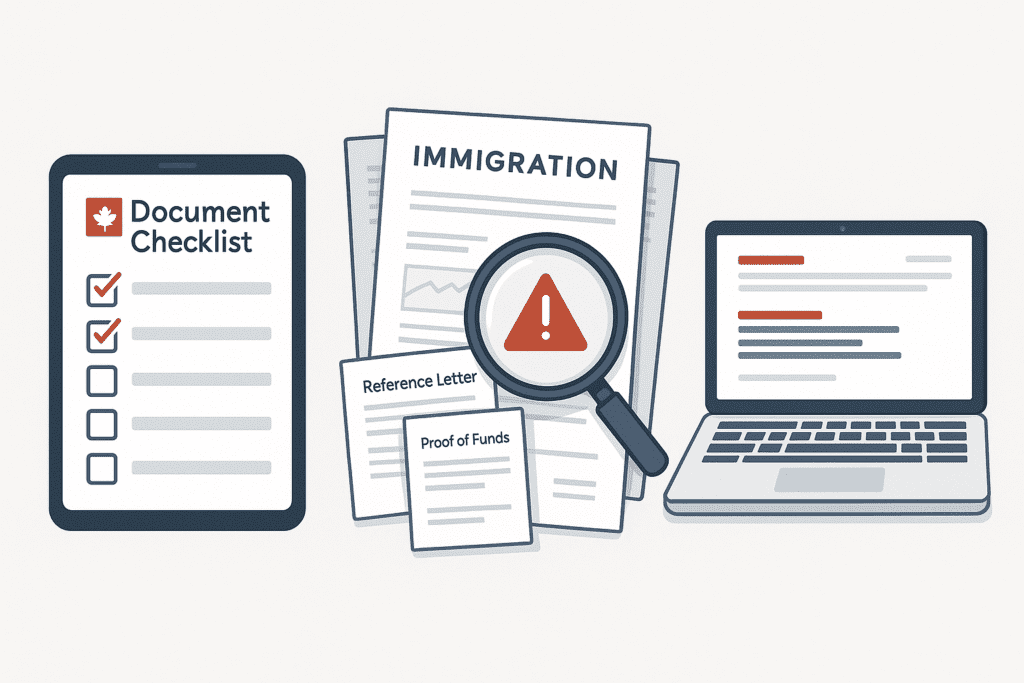
- Prepare documents in advance
By planning ahead and understanding how the system works, you can dramatically increase your chances of receiving an Invitation to Apply
Related Express Entry Guides
Understanding Express Entry requires familiarity with several important aspects of the immigration system.
These guides provide detailed explanations of specific topics related to Express Entry Canada.
How to Calculate Your CRS Score
→ /how-crs-score-works
How to Improve Your CRS Score
→ /how-to-improve-crs-score
Express Entry Draw History and Score Trends
→ /express-entry-draw-history
Provincial Nominee Programs Explained
→ /provincial-nominee-programs
Express Entry Document Checklist
→ /express-entry-document-checklist
These resources provide deeper insights into the Express Entry immigration process and help applicants prepare more effectively.