Immigrate to Canada Successfully: A Step-by-Step Guide to the Canada Immigration Process

Start your immigration plan today
A hand pressing a Canadian flag button on a blue background

Introduction

Every year, hundreds of thousands of people immigrate to Canada through programs designed to attract skilled workers, entrepreneurs, students, and families.

Canada operates one of the most structured immigration systems in the world, offering multiple pathways that allow qualified applicants to obtain Canada permanent residence and eventually apply for citizenship.

However, for many first-time applicants, the Canada immigration process can feel confusing.

There are multiple immigration programs, eligibility requirements, documents, and timelines to understand before submitting an application.

New applicants commonly ask questions such as:

  • How do I immigrate to Canada?
  • What are the Canada immigration requirements?
  • Which immigration program should I apply for?
  • How long does the immigration process take?
  • How much money do I need to move to Canada?

Understanding how to immigrate to Canada step by step helps applicants avoid costly mistakes and prepare their applications correctly.

This guide explains how the Canadian immigration system works and outlines the major steps most applicants follow when preparing a Canada PR application.


Understanding Canada Immigration Programs

Most immigration programs are designed to attract people who can contribute to Canada’s economy and workforce.

Canada offers several immigration pathways that allow qualified individuals to obtain permanent residence.

The most common pathways include:

Express Entry Canada

Express Entry is Canada’s primary immigration system for skilled workers.

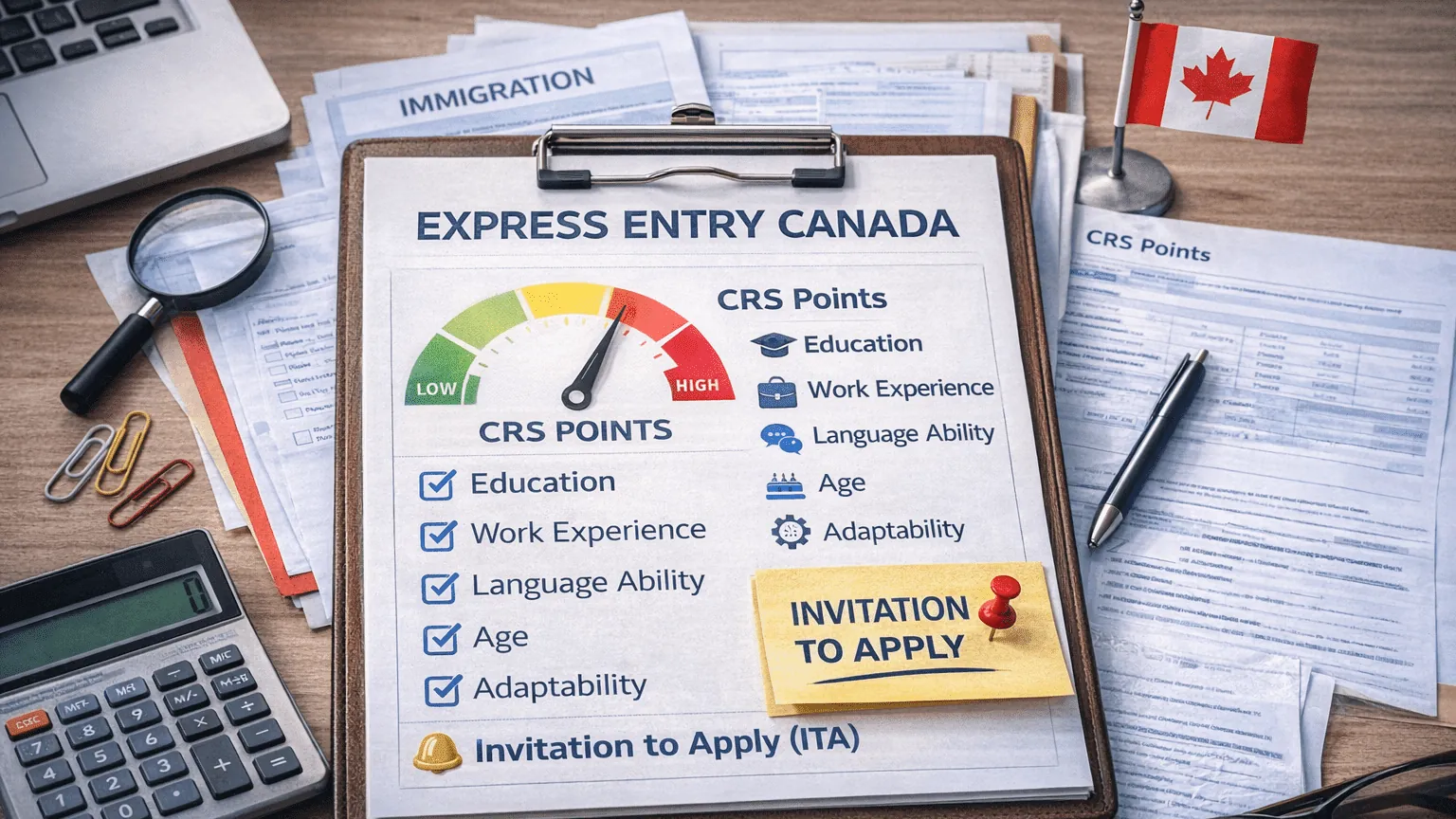
Applicants create an online profile and receive a Comprehensive Ranking System (CRS) score, which is calculated based on factors such as:

  • education
  • work experience
  • language ability
  • age
  • adaptability factors

Candidates with competitive CRS scores may receive an Invitation to Apply (ITA) for permanent residence.

Express Entry clipboard listing the CRS factors (education, work experience, language ability, age, adaptability) beside an Invitation to Apply note

Provincial Nominee Programs (PNP)

Provincial Nominee Programs allow Canadian provinces to nominate individuals who meet local labor market needs.

Receiving a provincial nomination can significantly increase an applicant’s chances of receiving an invitation to apply for permanent residence.

Family Sponsorship

Canadian citizens and permanent residents may sponsor eligible family members to immigrate to Canada.

Work Permits Leading to PR

Some applicants enter Canada first through a temporary work permit and later apply for permanent residence through programs such as the Canadian Experience Class.

Choosing the correct immigration pathway is one of the most important decisions when planning to move to Canada.

The Four Main Steps to Immigrate to Canada

Although immigration programs vary, most applicants follow a similar Canada immigration process when applying for permanent residence.

  1. Step 1

    Determine Your Immigration Eligibility

    The first step when planning to immigrate to Canada is determining whether you meet the requirements of a specific immigration program.

    Eligibility typically depends on factors such as:

    • education level
    • skilled work experience
    • language ability in English or French
    • age
    • adaptability factors

    Many skilled workers begin by evaluating their Express Entry eligibility and estimating their potential CRS score.

    Understanding your eligibility early helps you determine whether you should apply directly through Express Entry or explore alternative pathways.

  2. Step 2

    Prepare Your Immigration Profile

    Once eligibility is confirmed, the next stage involves preparing the information and documentation required for your immigration profile.

    Important preparation steps include:

    • completing language tests such as IELTS or CELPIP
    • obtaining an Educational Credential Assessment (ECA)
    • gathering employment documentation
    • preparing proof of funds Canada settlement funds

    Preparing documentation early can prevent delays later in the immigration process.

    Incomplete or incorrect documentation is one of the most common causes of application delays.

  3. Step 3

    Submit Your Canada PR Application

    After entering the immigration system, often through Express Entry Canada, candidates may receive an Invitation to Apply for permanent residence.

    At this stage, applicants must submit a full Canada PR application with supporting documents, including:

    • employment reference letters
    • education records
    • police certificates
    • medical examination results
    • proof of funds documentation

    Immigration officers review the application to confirm that the applicant meets program requirements.

  4. Step 4

    Prepare for Your Move to Canada

    Once an application is approved, applicants receive confirmation of permanent residence and can prepare to move to Canada.

    Preparation may include:

    • planning travel arrangements
    • preparing documents required for landing in Canada
    • organizing settlement funds
    • researching housing and employment opportunities

    Understanding the landing process can help new immigrants transition smoothly into life in Canada.

Choosing the Right Pathway to Immigrate to Canada

One of the most common questions new applicants ask is:

Which immigration pathway is best for me?

The answer depends on several factors, including:

  • education level
  • professional experience
  • language test scores
  • immigration goals

Common immigration pathways include:

  • Express Entry Canada for skilled workers
  • Provincial Nominee Programs
  • employer-supported immigration
  • work permits leading to permanent residence

Carefully evaluating immigration options helps applicants choose the most suitable path toward Canadian permanent residence.

Common Challenges in the Canada Immigration Process

While thousands of people successfully immigrate to Canada each year, the immigration process can still present challenges.

Applicants often struggle with:

  • understanding immigration program requirements
  • preparing accurate documentation
  • improving their Express Entry CRS score
  • meeting proof of funds requirements
  • navigating immigration timelines

These challenges are common for first-time applicants who are unfamiliar with the Canadian immigration system.

Learning the steps in advance can significantly reduce mistakes and delays.

Related Immigration Guides

Frequently Asked Questions About Canada Immigration

How long does it take to immigrate to Canada?

Processing times vary depending on the immigration program and the completeness of the application.

Express Entry applications may be processed within several months after submission, although preparation steps such as language testing and documentation gathering may take additional time.

Do I need a lawyer to immigrate to Canada?

Many applicants successfully submit immigration applications themselves.

However, understanding Canada immigration requirements, documentation standards, and program rules is essential when preparing an application.

What is the easiest way to immigrate to Canada?

The most suitable immigration pathway depends on an applicant’s qualifications, work experience, and language ability.

How much money do I need to move to Canada?

Applicants applying through programs such as Express Entry must demonstrate proof of funds to support themselves after arriving in Canada.

Written by Crystal Jing Chen, RCIC - Regulated Canadian Immigration Consultant. Verify my licence on the CICC public register (register.college-ic.ca).

Start Planning Your Immigration Path

If you are considering immigrating to Canada, the first step is determining which immigration pathway may be available to you.

Evaluating your eligibility and understanding the immigration process can help you prepare your application and avoid common mistakes.

Start your immigration plan today.