Landing in Canada | What Mistakes To Avoid At The Last Step
Receiving approval for Canadian permanent residence is a major milestone in the immigration process. After months of preparing documents and waiting for a decision, many applicants finally receive their Confirmation of Permanent Residence (COPR) and begin planning their move.
However, many new immigrants are unsure what actually happens when they arrive in Canada for the first time.
The landing in Canada process involves several important steps that take place when you arrive at a Canadian airport or land border.
These steps typically include:
immigration processing with a border services officer
verification of your permanent residence documents
declaring money when entering Canada
confirming your Canadian mailing address for your PR card
Understanding the Canada landing process can help you prepare for a smooth arrival and avoid unnecessary stress on your first day as a permanent resident.
This guide explains:
how the landing interview works
what documents you must bring when flying to Canada with COPR
Landing in Canada refers to the moment when a new immigrant officially becomes a permanent resident of Canada.
This process usually occurs when you enter Canada with your Confirmation of Permanent Residence (COPR) and passport.
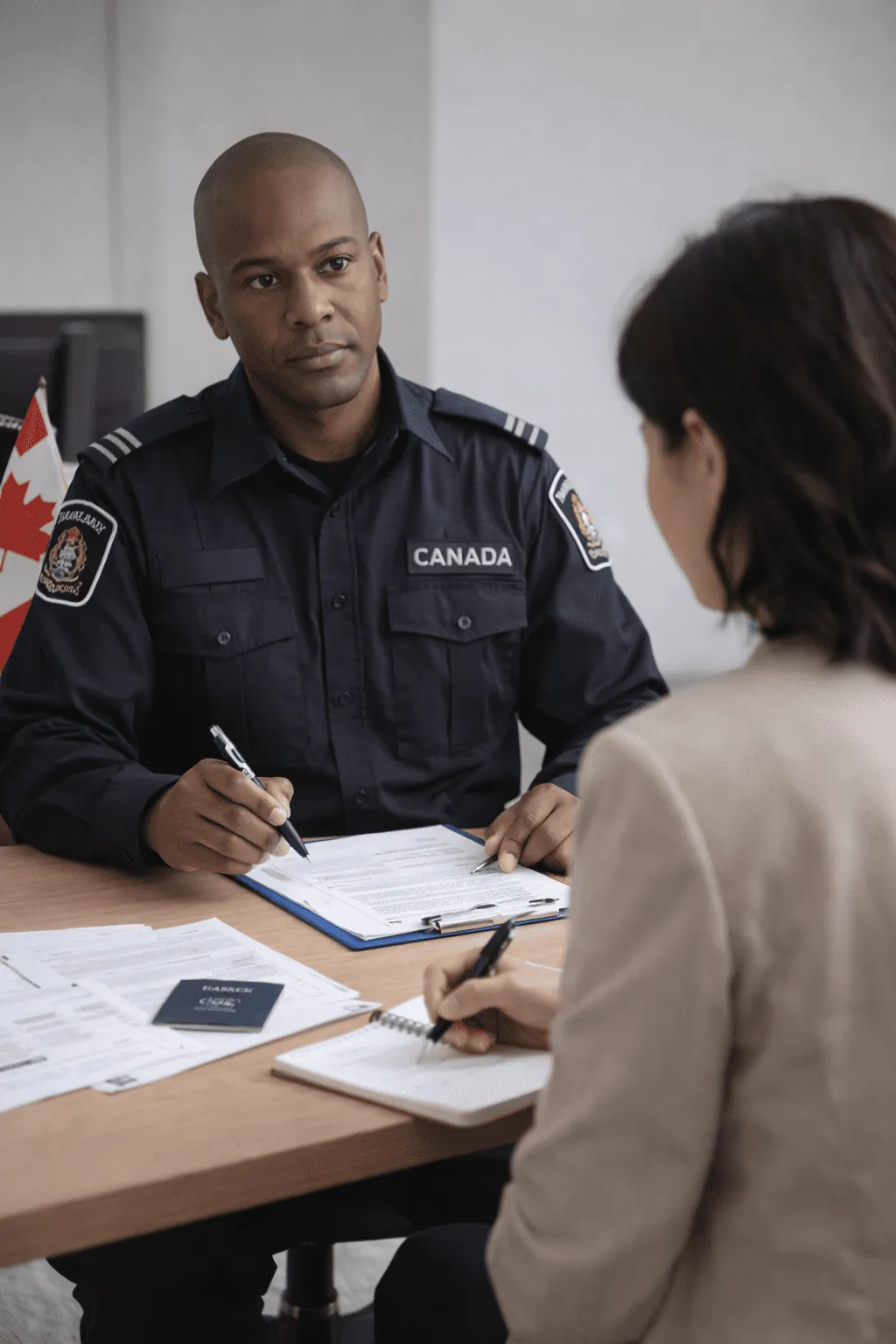
During the landing process, a Canada Border Services Agency (CBSA) officer reviews your immigration documents and confirms that your permanent residence status can be finalized.
The officer typically performs several steps:
verifies your passport and COPR
confirms your identity
asks basic questions related to your immigration application
confirms that your personal circumstances have not changed
Once this process is completed, you officially become a permanent resident of Canada.
For most applicants, the landing interview Canada PR process takes only a few minutes.
Flying to Canada With Your Confirmation of Permanent Residence
Many immigrants travel internationally when completing their landing in Canada.
When flying to Canada with COPR, it is important to keep all immigration documentation accessible in your carry-on luggage.
Airline staff may verify immigration documentation before boarding international flights.
Documents typically required when flying to Canada with COPR include:
passport
Confirmation of Permanent Residence (COPR)
immigration approval documents
proof of settlement funds
lists of personal goods you are bringing to Canada
Preparing these documents in advance helps ensure that the arrival process proceeds smoothly.
Documents You Must Bring When Landing
Immigration officers may request several documents during your landing interview.
Keeping these documents organized in your carry-on luggage helps avoid delays during immigration processing.
Important documents include:
valid passport
Confirmation of Permanent Residence (COPR)
immigration approval documents
proof of settlement funds
lists of goods accompanying and goods to follow
These documents help immigration officers confirm that your permanent residence approval is still valid.
Declaring Money When Entering Canada
Many immigrants wonder how much money they are allowed to bring when landing in Canada.
There is no limit to the amount of money you can bring into Canada.
However, Canadian law requires travelers to declare any amount exceeding $10,000 CAD when entering the country.
This requirement is commonly referred to as declaring money Canada airport regulations.
Funds may be carried in several forms:
cash
bank drafts
traveler’s checks
electronic transfers
financial instruments
If you are carrying more than $10,000 CAD, you must declare the amount to Canadian border officials.
Failure to declare funds may result in penalties or confiscation.
The Landing Interview
The Canada landing interview is usually short and straightforward.
A border services officer will ask several questions to confirm that your circumstances have not changed since your immigration visa was issued.
Preparing for your arrival in Canada can make your immigration journey significantly easier.
Before traveling, it is helpful to understand the documents you must bring, how to declare money when entering Canada, and what to expect during your landing interview.
A structured preparation checklist can help ensure that your first days in Canada go smoothly.
We use analytics cookies to count visits and improve our guides. You can accept or decline;
declining does not affect anything on the site. See our Privacy Policy.