
Table of Contents
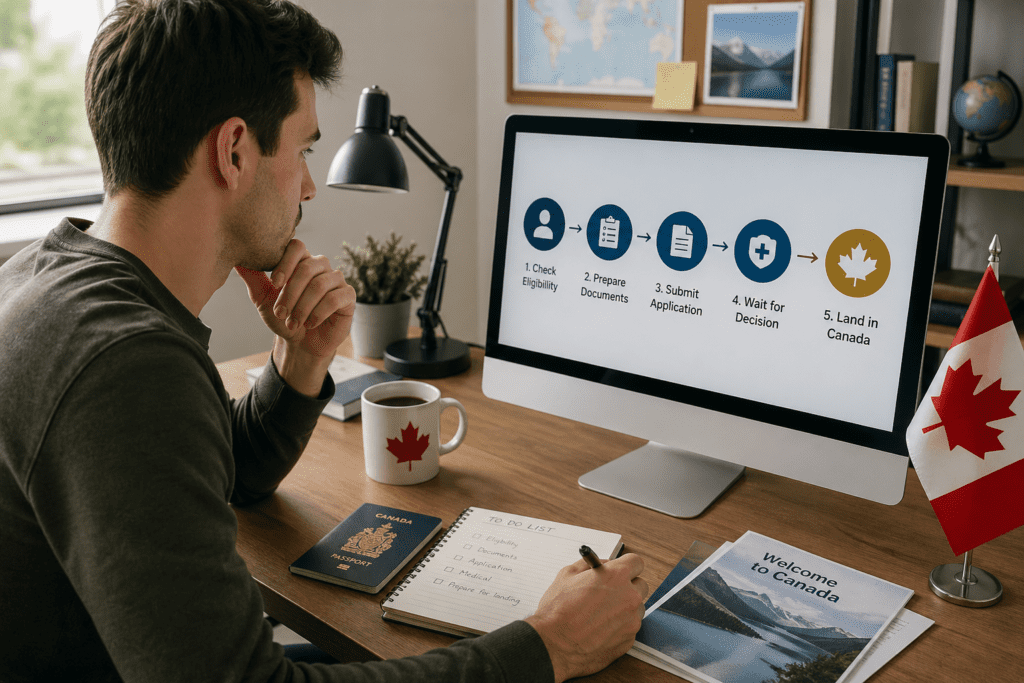
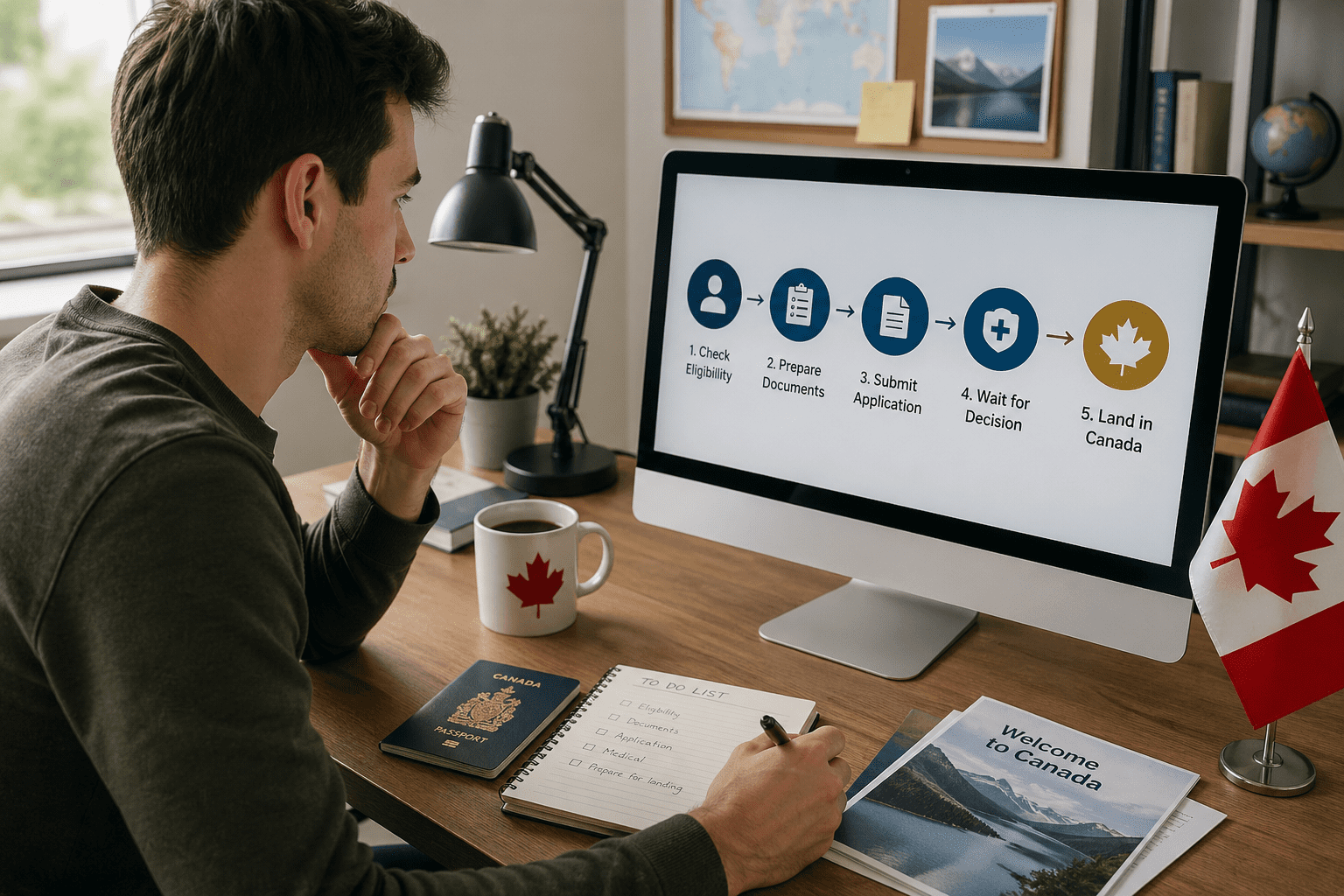
This canada immigration guide covers the five most critical steps in the permanent residence application process for first-time DIY applicants in 2026. Canada’s immigration system is large, complex, and constantly evolving – but the path from deciding to immigrate to landing as a permanent resident follows a consistent structure that applies to the majority of economic immigration applicants. Understanding that structure before you begin prevents the most common mistakes, sets realistic timeline expectations, and gives you a framework for every decision that follows.
Step 1 – Assess Your Eligibility Accurately Before Preparing Any Documents
The most important step in this canada immigration guide comes before any document preparation: confirming which program you actually qualify for and whether your qualifications meet that program’s minimum requirements. Investing months in document preparation for a program you do not qualify for is the most expensive mistake in DIY immigration – both in time and in the cost of documents that may expire before a qualifying application can be submitted.
The three main Express Entry programs – Federal Skilled Worker Program FSWP, Federal Skilled Trades Program FSTP, and Canadian Experience Class CEC – each have distinct eligibility requirements. Confirm your NOC code and whether your work experience meets the quantity and continuity requirements. Confirm your language scores meet the minimum CLB threshold for your program. Confirm your educational credentials are assessed if required. Confirm your proof of funds meets the minimum if applicable.
For the full eligibility assessment framework covering all five core requirements, the Canada immigration requirements guide covers every factor in detail.
Step 2 – Complete Mandatory Pre-Application Steps in the Right Order
This canada immigration guide emphasizes the importance of sequencing. Several mandatory steps must be completed before your Express Entry profile can be submitted – and completing them in the wrong order creates delays that could have been avoided.
Language testing should be done first because the results drive everything else. Your language scores determine your program eligibility, your CRS score, and your competitiveness in the pool. Without confirmed language results, you cannot accurately calculate your CRS score or confirm your program eligibility. Book your test early and prepare thoroughly.
Educational Credential Assessment for FSWP applicants should run in parallel with language test preparation. ECA processing takes four to twelve weeks – starting it the day your language test is booked means it may be ready before your results arrive. Starting it after your results arrive adds unnecessary weeks to your timeline.
Proof of funds documentation requires six months of bank statements – a calendar constraint that cannot be compressed. If you are starting from a low balance, the six-month requirement means you need to start building your qualifying balance six months before you plan to submit, not six months before your first document preparation session.
Step 3 – Build and Submit a Competitive Express Entry Profile
Once your pre-application steps are complete, this canada immigration guide moves to profile creation. Your Express Entry profile is a declaration of your qualifications – work experience, language scores, education, age, and personal factors – that IRCC uses to calculate your CRS score and rank you against other pool candidates.
Enter every factor accurately. Review the CRS score calculation the portal shows and verify it against the official calculation factors. If your score is below recent draw cutoffs, identify improvement strategies before submitting – language retesting, spousal factor addition, provincial nomination pursuit, or additional Canadian work experience accumulation – and implement them before your profile is submitted or immediately after.
Your profile is valid for 12 months. If you receive an ITA, you have 60 days to submit a complete application. If your profile expires without an ITA, you can resubmit. Managing your profile expiry is part of the ongoing process after submission – know when your profile expires and what your score improvement options are if you have not received an ITA by the halfway point of your profile validity.
Step 4 – Prepare Your Full Application Package Before Your ITA Arrives
The most common mistake this canada immigration guide is designed to prevent at the application stage is receiving an ITA and then scrambling to gather documents in the 60-day window. The 60-day deadline is fixed. Police certificates from some countries take four to six weeks. Medical examination appointments may not be available immediately. If you start gathering documents only after your ITA arrives, you may run out of time.
The documents that take longest to obtain should be initiated before your ITA arrives. Police certificates from your home country and any other country of extended residence can and should be initiated when your Express Entry profile is submitted or when your CRS score reaches competitive range. They do not expire immediately, and having them ready removes one of the most common 60-day bottlenecks.
For the complete document checklist organized by category with format and content requirements, the canada immigration checklist covers every document in your application package.
Step 5 – Submit a Complete Application and Prepare for Landing
The final step in this canada immigration guide is submission and landing preparation. Submit your complete application package within the 60-day window, ensuring every document meets IRCC’s quality standard for its category – not just that it is present, but that it contains every required field and is consistent with every other document in the package.
After submission, IRCC processing takes approximately six months for Express Entry applications. During this period, maintain your current status in Canada if you are here on a work permit. Ensure your mailing address is current with IRCC. Respond promptly to any requests for additional documentation. And begin your landing preparation – coordinating your travel timeline with your COPR expiry date, arranging housing, and planning the administrative steps you will complete in your first weeks as a permanent resident.
A pre-submission review of your complete application package is one of the highest-value steps you can take at this stage. The DIY Document Review service provides a structured assessment of your full package against IRCC’s actual review criteria before you submit – the one opportunity to catch problems before they become refusal reasons.
FAQ
How long does the Canada immigration process take from start to finish in 2026?
Based on this canada immigration guide, the total timeline from beginning eligibility assessment to landing as a permanent resident typically runs 12 to 24 months for most Express Entry applicants. Pre-application preparation takes 3 to 9 months. Pool wait time varies by CRS score. IRCC processing takes approximately 6 months. Landing coordination adds additional weeks.
What is the easiest Canada immigration pathway for first-time applicants in 2026?
There is no universally easiest pathway – the right pathway depends on your qualifications. For applicants with Canadian work experience, CEC is generally the most accessible federal pathway. For applicants outside Canada with strong language scores and skilled work experience, FSWP is the primary pathway. For workers in specific trades, FSTP may be more accessible. This canada immigration guide covers the factors that determine which program fits your profile.
Do I need an immigration consultant to follow this Canada immigration guide?
No. This canada immigration guide is designed for DIY applicants who want to navigate the process independently. IRCC accepts applications directly from applicants without consultant or lawyer representation. However, complex situations – inadmissibility concerns, prior refusals, misrepresentation findings – benefit from professional guidance regardless of how strong the applicant’s general understanding is.
What is the most common mistake first-time Canada immigration applicants make?
The most common mistake identified in this canada immigration guide is submitting a complete application in terms of document count but an incomplete application in terms of document quality – reference letters that do not confirm NOC duties, financial statements that do not cover the full required period, or inconsistencies between documents that the applicant did not notice because they reviewed documents individually rather than as a package.
How much does Canada immigration cost for a first-time applicant in 2026?
Total canada immigration costs for a single Express Entry applicant run approximately CAD 4,000 to 7,000 including government fees, language testing, ECA, medical examination, police certificates, and document preparation. Settlement funds of at least CAD 14,690 are required separately. For a detailed cost breakdown by category, the canada immigration cost guide covers every expense.
Final Thoughts
This canada immigration guide covers the five critical steps that determine whether a first-time applicant’s permanent residence journey is organized, efficient, and successful. Assess eligibility accurately before spending money on documents. Complete pre-application steps in the right sequence. Build a competitive profile and manage it actively. Prepare your application package before your ITA arrives. Submit completely and prepare for landing as a parallel process.
The canada immigration guide principle that runs through all five steps is the same: preparation that happens before a deadline is always more effective than preparation that happens because of a deadline. Start early, sequence correctly, and submit a complete package. Canada’s immigration system is accessible to well-prepared DIY applicants who understand what the system is assessing and what their documents must demonstrate.This article is for educational purposes only and does not constitute legal or immigration advice. For guidance specific to your situation, consult a licensed RCIC or immigration lawyer.
