
LMIA Work Permit Canada: 5 Critical Facts Applicants Must Know
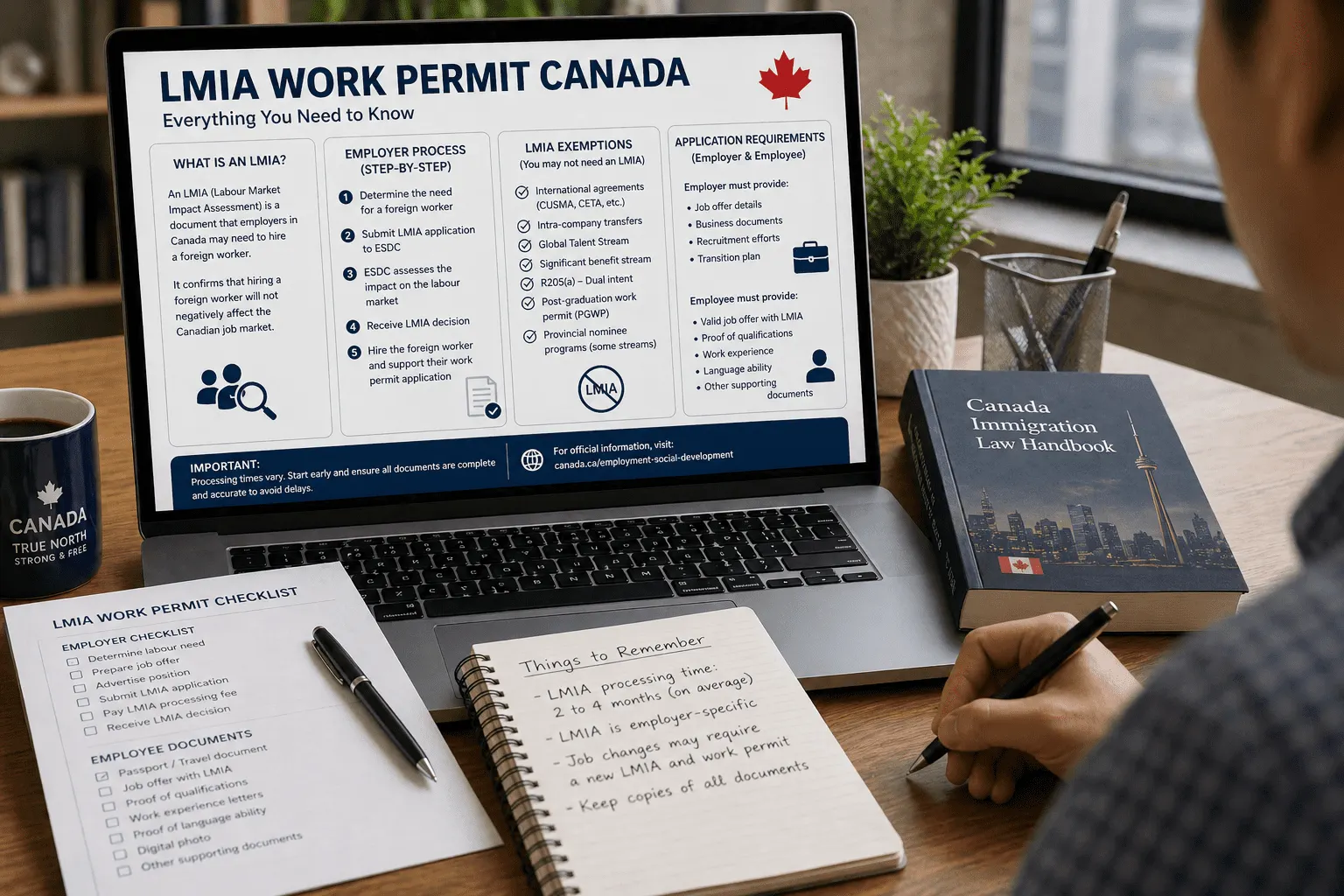
Table of Contents
- What an LMIA Is and Why It Exists
- Fact 1 – The LMIA Application Is the Employer’s Responsibility
- Fact 2 – LMIA Processing Times Vary Significantly by Stream
- Fact 3 – A Positive LMIA Does Not Guarantee Work Permit Approval
- Fact 4 – Many Work Permits Are LMIA-Exempt
- Fact 5 – LMIA Validity and Work Permit Duration Are Connected
- FAQ
- Final Thoughts
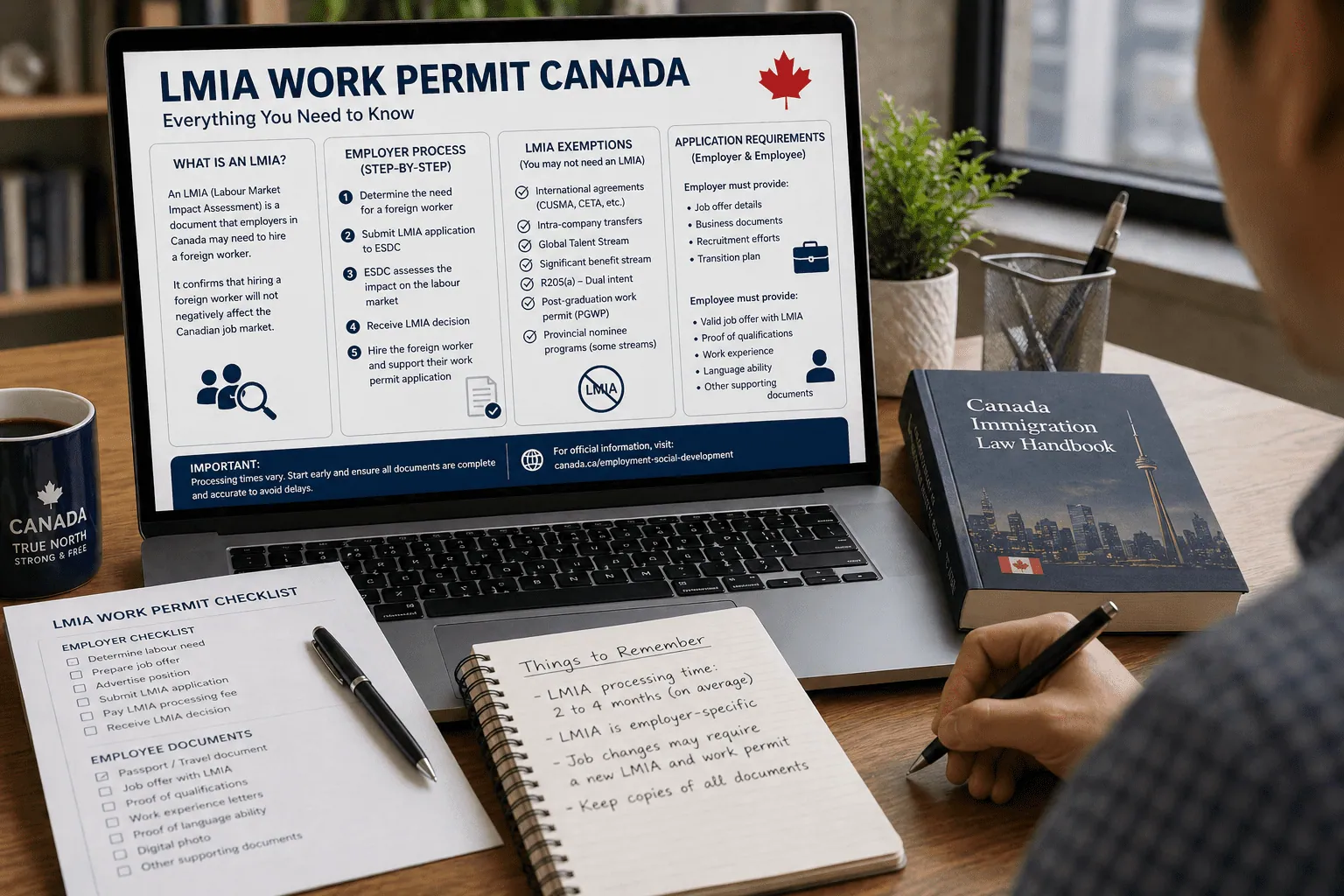
An LMIA work permit Canada application involves two distinct processes happening in sequence – the employer’s Labour Market Impact Assessment and your work permit application – and most applicants only understand the second half. The LMIA is the employer’s responsibility, but its outcome directly determines whether your work permit application succeeds or fails. Understanding how the LMIA process works, what it requires from your employer, and where the most common failures occur is essential preparation for any foreign worker pursuing employer-sponsored work authorization in Canada.
This article covers the five most critical facts about the LMIA work permit Canada process from the perspective of the foreign worker.
What an LMIA Is and Why It Exists
A Labour Market Impact Assessment LMIA is a document issued by Employment and Social Development Canada ESDC that assesses the impact of hiring a foreign worker on Canada’s labor market. A positive LMIA confirms that the employer has demonstrated a genuine need to hire a foreign national because no qualified Canadian citizen or permanent resident is available for the position.
The LMIA process exists to protect the Canadian labor market. Employers cannot simply hire foreign workers because they are cheaper or more convenient – they must demonstrate that they made genuine efforts to recruit locally and that hiring a foreign worker will not negatively affect wages or working conditions for Canadian workers.
For foreign workers, the LMIA is not something you apply for. It is something your employer applies for on your behalf. Your role in the LMIA process is to ensure your employer has the correct information about your qualifications, your intended position, and your offered wage. The LMIA number issued to your employer is then included in your work permit application.
For the broader context of how LMIA work permits fit within Canada’s overall work permit framework, the work permit Canada requirements guide covers both LMIA-based and LMIA-exempt permit categories in detail.
Fact 1 – The LMIA Application Is the Employer’s Responsibility
The most important fact about the LMIA work permit Canada process is that the LMIA application is submitted by the employer, not the worker. Many foreign nationals who receive a job offer from a Canadian employer assume they need to initiate the LMIA process. They do not.
Your employer submits the LMIA application to ESDC, pays the LMIA application fee of $1,000 CAD per position, provides evidence of local recruitment efforts including job advertisements and records of Canadian applicants considered, and demonstrates that the offered wage meets or exceeds the prevailing wage for the occupation in the province where the work will be performed.
Your role is to provide your employer with accurate information about your qualifications, work experience, and credentials so they can accurately describe the position requirements and confirm your eligibility in the LMIA application. Inaccurate information provided to your employer that ends up in the LMIA application can create inconsistencies that surface during your work permit review.
Fact 2 – LMIA Processing Times Vary Significantly by Stream
LMIA work permit Canada timelines are heavily affected by which LMIA stream your employer applies under. ESDC administers multiple LMIA streams with different processing times and requirements.
The Global Talent Stream is the fastest LMIA stream, designed for employers hiring highly skilled workers in technology and other in-demand sectors. Global Talent Stream LMIAs are processed within two weeks in most cases. This stream requires employers to submit a Labour Market Benefits Plan describing how hiring the foreign worker will benefit Canadian workers through job creation, skills transfer, or other measurable outcomes.
The High-Wage Worker stream applies to positions offering wages at or above the provincial median wage for the occupation. High-Wage LMIAs are processed in several weeks to a few months and require evidence of local recruitment efforts over a minimum advertising period.
The Low-Wage Worker stream applies to positions offering wages below the provincial median wage. Low-Wage LMIAs face additional restrictions – including caps on the proportion of temporary foreign workers an employer can have on-site – and processing times are generally longer than high-wage stream applications.
Agricultural streams and caregiver streams have their own separate LMIA processes with specific requirements distinct from the general temporary foreign worker streams.
Fact 3 – A Positive LMIA Does Not Guarantee Work Permit Approval
This is the most critical misconception about the LMIA work permit Canada process. A positive LMIA from ESDC is a necessary condition for an employer-specific work permit application – but it is not a guarantee of approval. IRCC conducts its own review of your work permit application independently of ESDC’s LMIA decision.
IRCC assesses your personal admissibility, the consistency between your qualifications and the position described in the LMIA, whether your job offer letter meets IRCC’s documentation standards, and whether you have demonstrated temporary intent if applying from outside Canada.
A positive LMIA confirms that the employer’s need is legitimate. It does not confirm that you are the right candidate for the position or that your personal immigration history and admissibility are clear. Both reviews must succeed for the work permit to be issued.
Applicants who receive a positive LMIA for their employer and then submit a weak work permit application – with incomplete personal documentation, inconsistent qualifications claims, or inadequate temporary intent evidence – can still be refused.
Fact 4 – Many Work Permits Are LMIA-Exempt
A significant proportion of Canadian work permits are issued without an LMIA under the International Mobility Program. Understanding LMIA exemptions is important because LMIA-exempt work permits process faster, do not require employer advertising efforts, and avoid the $1,000 CAD LMIA application fee.
Common LMIA exemptions include: workers covered by international trade agreements such as CUSMA for US and Mexican citizens in eligible professional categories, intra-company transferees moving to a Canadian office of their existing employer, significant benefit workers including certain researchers, artists, and athletes, and spouses of international students and certain temporary workers eligible for open work permits.
If you receive a job offer from a Canadian employer, determine whether your position or citizenship qualifies for an LMIA exemption before your employer begins the LMIA application process. An unnecessary LMIA application wastes time and the $1,000 application fee when an exemption was available.
IRCC’s International Mobility Program employer compliance requirements still apply to LMIA-exempt positions. Employers hiring LMIA-exempt workers must submit an offer of employment through IRCC’s employer portal and pay a $230 CAD compliance fee before you submit your work permit application.
Fact 5 – LMIA Validity and Work Permit Duration Are Connected
The final critical fact about the LMIA work permit Canada process is how LMIA validity affects your work permit duration. A positive LMIA is valid for a specific period – typically six months from the date of issue – during which the employer can use it to support a work permit application. If the work permit application is not submitted within the LMIA validity period, the LMIA expires and the employer must reapply.
Your work permit duration is typically tied to the duration specified in the LMIA and the job offer. Most employer-specific work permits are issued for the duration of the job offer up to a maximum of three years, subject to your passport validity and other factors.
Work permit renewals require either a new LMIA or an LMIA exemption confirmation if your situation has changed. If you are continuing with the same employer in the same position, renewal is generally straightforward. If you are changing positions, changing employers, or if your LMIA was issued under a specific stream that has since expired, the renewal process may require a new LMIA application.
For workers planning to transition from a work permit to permanent residence through the Canadian Experience Class, the express entry eligibility guide explains how Canadian work experience accumulated on an LMIA work permit counts toward CEC eligibility. If you want a pre-submission review of your work permit application documents before submitting to IRCC, the DIY Document Review service provides a structured assessment against IRCC’s actual review criteria.
FAQ
What is an LMIA work permit Canada and how does it work? An LMIA work permit Canada is an employer-specific work permit issued after your employer obtains a positive Labour Market Impact Assessment from ESDC. The LMIA confirms that no qualified Canadian was available for the position. Your employer applies for the LMIA, pays the application fee, and provides the LMIA number to you for inclusion in your work permit application to IRCC.
How long does LMIA work permit Canada processing take? Total LMIA work permit Canada processing combines LMIA processing and work permit processing. Global Talent Stream LMIAs process in approximately two weeks. High-Wage stream LMIAs typically take several weeks to a few months. Work permit processing after LMIA approval runs two to eight weeks online. Total processing from LMIA application to work permit issuance typically runs two to six months depending on the stream.
Who pays for the LMIA application in Canada? The employer pays the LMIA application fee of $1,000 CAD per position. It is illegal for employers to recover this fee from foreign workers either directly or through wage deductions. If an employer asks you to pay any portion of the LMIA fee, this is a violation of federal labor standards and should be reported to ESDC.
Can I change employers if I have an LMIA work permit Canada? No. An LMIA work permit is employer-specific. Working for a different employer without a new work permit authorization is unauthorized work and violates your permit conditions. To change employers, your new employer must obtain a new LMIA or confirm an LMIA exemption, and you must apply for a new work permit before starting work with the new employer.
Does an LMIA work permit Canada lead to permanent residence? An LMIA work permit itself does not lead to permanent residence directly. However, work experience gained on an LMIA work permit in an eligible NOC TEER occupation counts toward Express Entry eligibility under the Federal Skilled Worker Program FSWP and can contribute to Canadian Experience Class CEC eligibility if the work is performed in Canada. Many workers use LMIA work permits as the first step in a planned pathway to permanent residence.
Final Thoughts
The LMIA work permit Canada process is a two-stage system where both stages must succeed independently. Your employer’s LMIA application and your personal work permit application are reviewed separately by different government bodies applying different criteria.
Understanding this distinction changes how you approach the process. Your job is not just to wait for your employer to obtain the LMIA. Your job is to ensure your personal documentation is complete, your qualifications are accurately represented, and your work permit application is strong enough to succeed on its own merits once the LMIA is in hand.
The most preventable LMIA work permit Canada failures happen at the work permit stage – not the LMIA stage. Applicants who treat the positive LMIA as the finish line and submit a careless work permit application lose the opportunity their employer’s effort and investment created.
This article is for educational purposes only and does not constitute legal or immigration advice. For guidance specific to your situation, consult a licensed RCIC or immigration lawyer.