
Work Permit Extension Canada: 5 Critical Steps to Renew Successfully
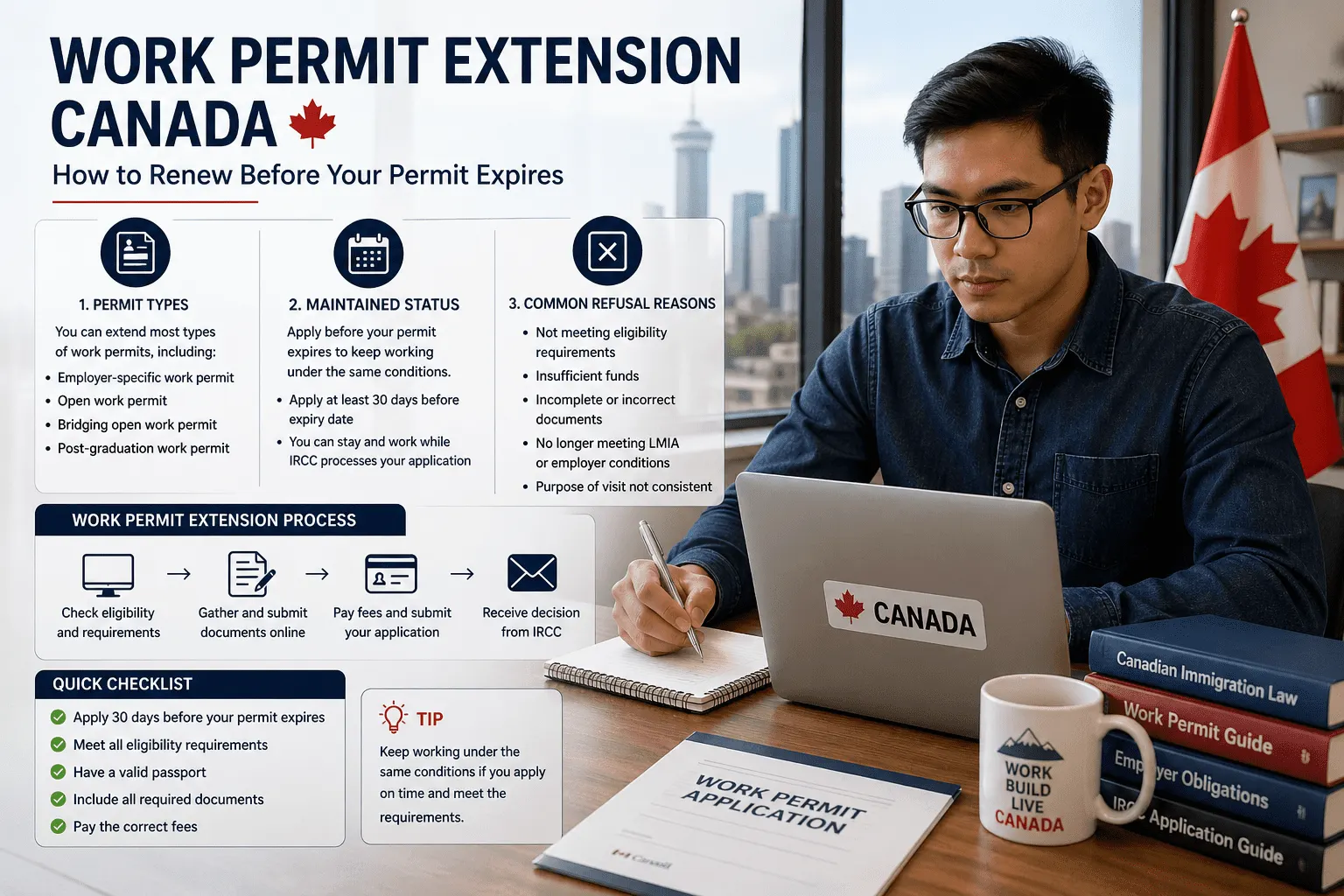
Table of Contents
- Why Work Permit Extension Canada Applications Fail
- Step 1 – Apply Before Your Current Work Permit Expires
- Step 2 – Confirm Your Extension Category and Requirements
- Step 3 – Prepare a Complete and Consistent Document Package
- Step 4 – Address Any Changes in Your Personal Circumstances
- Step 5 – Demonstrate Continued Temporary Intent if Required
- FAQ
- Final Thoughts
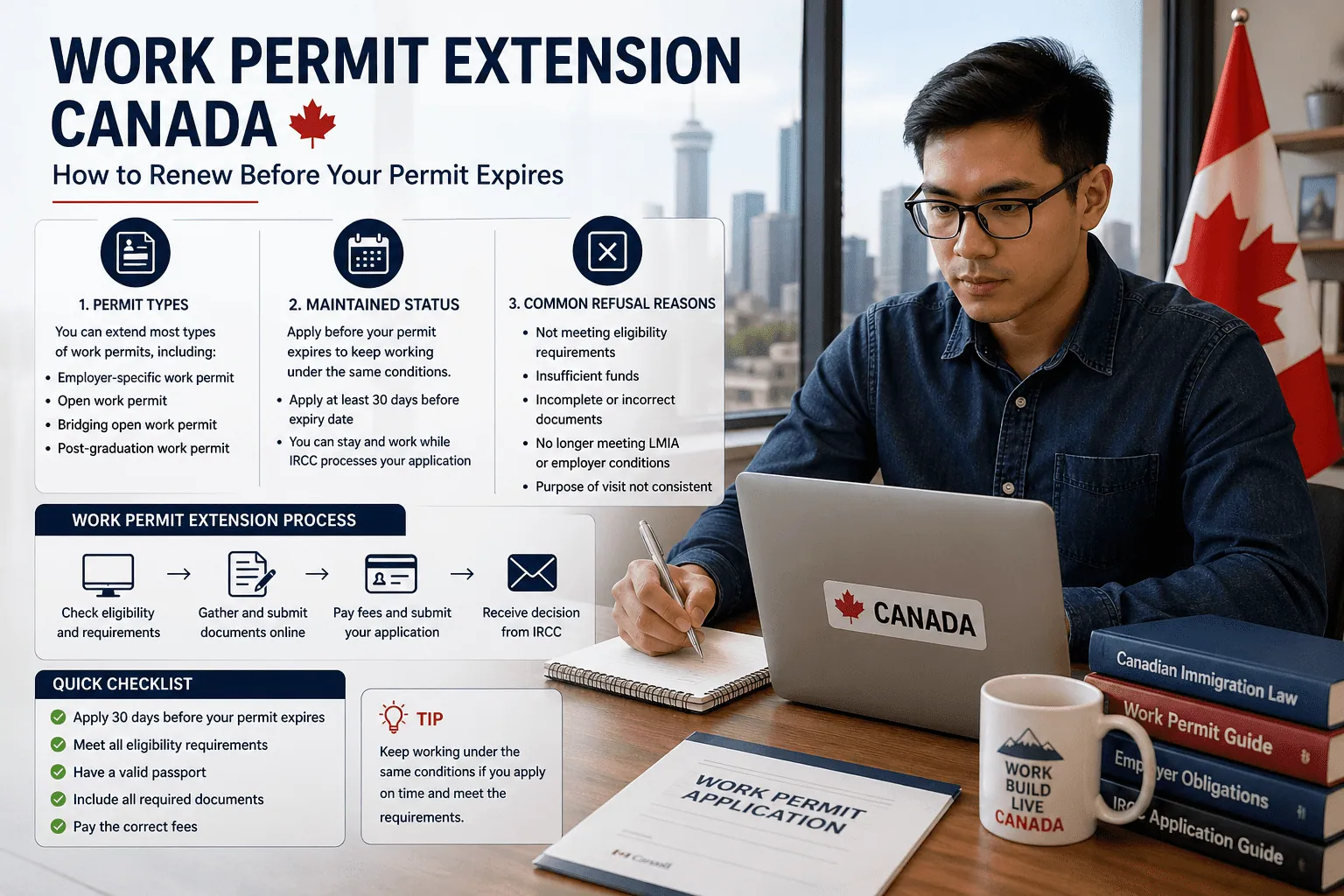
A work permit extension Canada application is not simply a renewal form. It is a fresh assessment of your eligibility to remain and work in Canada, conducted by IRCC under the same criteria as your original application. Many temporary workers assume that having worked in Canada without incident makes their extension application routine. It does not. IRCC reviews every extension application on its own merits, and the same factors that could have caused a refusal on your initial application can cause a refusal on your extension.
This article covers the five most critical steps for a successful work permit extension Canada application.
Why Work Permit Extension Canada Applications Fail
Work permit extension Canada refusals follow predictable patterns. The most common causes are: applying too late and losing maintained status, submitting an application that does not reflect changes in your employment situation, failing to demonstrate continued temporary intent, and submitting incomplete documentation.
Understanding the process before your current permit expires gives you time to address each of these risk factors. The worst time to learn about work permit extension Canada requirements is after your permit has expired.
For a full overview of work permit types and the requirements that apply to each, the work permit Canada requirements guide covers both employer-specific and open work permit categories in detail.
Step 1 – Apply Before Your Current Work Permit Expires
The most important step in any work permit extension Canada application is timing. You must submit your extension application before your current work permit expires. Submitting after expiry means you are no longer authorized to remain in Canada as a temporary worker and cannot legally continue working while your application is processed.
IRCC recommends applying at least 30 days before expiry. In practice, given current processing times, applying 3 to 4 months before expiry is a safer approach. This buffer allows time for IRCC to request additional documents, for you to respond to those requests, and for the application to be processed without creating a gap in your work authorization.
If you submit your work permit extension Canada application before your current permit expires, you are covered under maintained status – also called implied status – while IRCC processes your application. Maintained status allows you to continue working under the same conditions as your expiring permit until IRCC makes a decision. This protection only applies if you applied before expiry. There is no maintained status for late applications.
Step 2 – Confirm Your Extension Category and Requirements
Not all work permit extension Canada applications follow the same process. Your extension pathway depends on your current permit type and your employment situation at the time of renewal.
Employer-specific closed work permit holders extending with the same employer in the same position generally need an updated job offer letter confirming continued employment and a new LMIA or LMIA exemption confirmation if the original authorization period has expired. If your original LMIA is still valid and covers the extension period, you may be able to reference it without obtaining a new one.
Employer-specific closed work permit holders changing employers must obtain a new LMIA or LMIA exemption for the new employer before submitting their extension application. Working for a new employer on your old permit before the new permit is issued is unauthorized work – a violation that affects future immigration applications.
Open work permit holders extending – including PGWP holders who have transitioned to a bridging open work permit – follow a different process based on their specific open permit stream. If your open work permit is expiring and you do not qualify for a renewal under the same stream, you must either qualify under a different stream or apply for an employer-specific permit.
Step 3 – Prepare a Complete and Consistent Document Package
A work permit extension Canada application requires the same documentary rigor as an original application. IRCC does not give credit for having worked in Canada previously – they assess your current application package against current requirements.
Core documents for most employer-specific extension applications include: a current job offer letter meeting IRCC’s documentation standards including wage, hours, duration, and NOC code, a valid LMIA number or LMIA exemption code, your current work permit, your passport valid for the extension period requested, and any updated personal status documents such as a marriage certificate if your marital status has changed.
Your job offer letter must reflect your current employment terms – not the terms from your original application. If your wage has increased, your title has changed, or your location has moved, the letter must reflect the current reality. Submitting an outdated or inaccurate job offer letter is a documentation inconsistency that triggers additional scrutiny.
If you want a pre-submission review of your work permit extension Canada document package before submitting to IRCC, the DIY Document Review service provides a structured check against IRCC’s actual assessment criteria.
Step 4 – Address Any Changes in Your Personal Circumstances
A work permit extension Canada application is an opportunity for IRCC to reassess your personal circumstances, including any changes since your original application. Changes that must be disclosed and documented include: a change in employer or job title, a change in your country of residence before your time in Canada, any criminal convictions since your original application, and any medical conditions that have developed that might affect admissibility.
Failing to disclose material changes in your circumstances is misrepresentation – a serious immigration offense that can result in refusal, removal from Canada, and a ban from future applications. IRCC has access to your immigration history and can identify discrepancies between your extension application and your original application.
If your personal circumstances have changed in a way that might affect your admissibility – a criminal conviction, a medical diagnosis, or a change in your family situation – assess the impact carefully before submitting your extension application. In some cases, proactive disclosure with explanation is better than a discrepancy discovered during processing.
Step 5 – Demonstrate Continued Temporary Intent if Required
Work permit extension Canada applicants who applied from outside Canada on their original application demonstrated temporary intent as part of that process. For extensions submitted from inside Canada, IRCC may assess whether you continue to have ties outside Canada that support your temporary status.
This assessment is more relevant for applicants with longer cumulative stays in Canada or those in occupations or family situations that might suggest an intention to remain permanently without pursuing the proper permanent residence pathway. Applicants who are clearly in the process of transitioning to permanent residence through Express Entry or a PNP stream are generally assessed differently than those with no apparent permanent residence pathway.
If you are using your work permit period to accumulate CEC-qualifying work experience toward Express Entry permanent residence, maintaining a clear record of your employment and using that experience to build your Express Entry profile is the most productive approach during this period. For workers on the path from work permit to permanent residence through CEC, the open work permit Canada guide covers how open work permits and bridging permits fit into this transition.
FAQ
How early should I apply for a work permit extension Canada?
Apply for your work permit extension Canada at least 3 to 4 months before your current permit expires. IRCC recommends a minimum of 30 days, but longer processing times make earlier submission safer. Submitting before expiry activates maintained status, allowing you to continue working legally while IRCC processes your application.
What is maintained status during a work permit extension Canada application?
Maintained status – also called implied status – allows you to continue working under the same conditions as your expiring work permit while IRCC processes your extension application. It applies only if you submitted your extension application before your current permit expired. Working after permit expiry without a pending application is unauthorized work.
Can I change employers during a work permit extension Canada application?
If you hold an employer-specific closed work permit, you cannot change employers without a new work permit authorization. Your new employer must obtain a new LMIA or LMIA exemption, and you must apply for a new work permit before starting work with the new employer. Changing employers on a closed permit without authorization is a violation of your permit conditions.
What documents do I need for a work permit extension Canada application?
Core documents for most employer-specific work permit extension Canada applications include a current job offer letter, a valid LMIA number or LMIA exemption code, your current work permit, your passport, and any updated personal status documents. Open work permit extension requirements vary by stream.
What happens if my work permit extension Canada application is refused?
If your work permit extension Canada application is refused while you are on maintained status, your authorization to remain in Canada ends. You typically have a short period to leave Canada voluntarily. If you are still in Canada after the voluntary departure deadline, IRCC may issue a removal order. You can reapply if the refusal reason can be addressed, but you may need to apply from outside Canada.
Final Thoughts
A work permit extension Canada application is a consequential immigration step that deserves the same preparation as an original application. The maintained status protection that comes from applying before expiry is the single most important procedural safeguard in the entire process – use it by applying early.
The five steps in this article cover the most critical elements of a successful work permit extension Canada application. Apply before expiry. Confirm your extension category. Prepare a complete and current document package. Disclose any changes in your circumstances. Address temporary intent if your situation raises questions.
Your work permit extension Canada application is IRCC’s opportunity to reassess your file. Prepare it with the rigor that assessment deserves.
This article is for educational purposes only and does not constitute legal or immigration advice. For guidance specific to your situation, consult a licensed RCIC or immigration lawyer.