
PNP Draw Results: 5 Critical Facts About Provincial Invitations
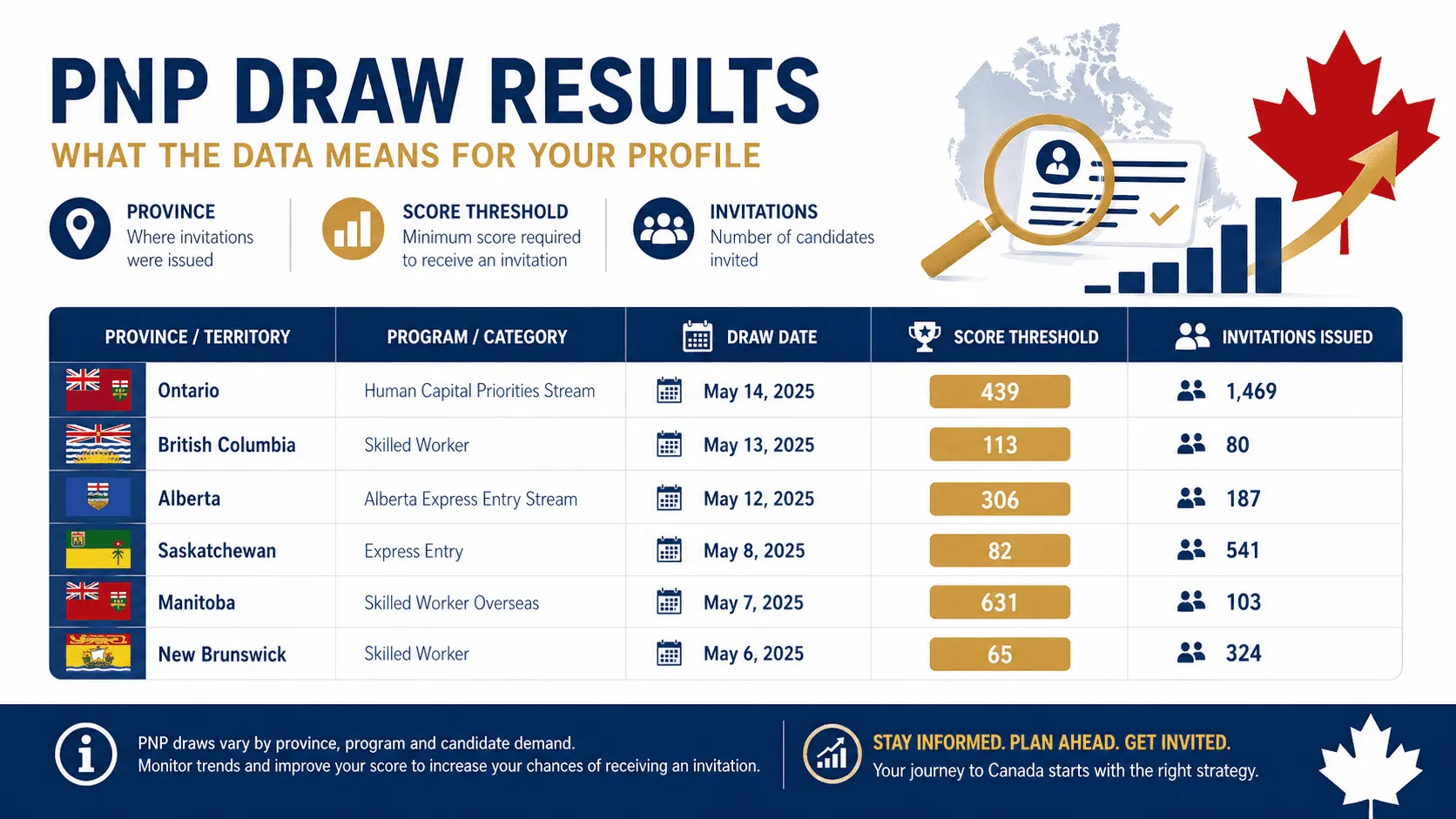
Table of Contents
- What PNP Draw Results Actually Contain
- Fact 1 – The Cutoff Score Is a Result, Not a Threshold
- Fact 2 – Invitation Volume Tells You as Much as the Cutoff Score
- Fact 3 – Category-Specific Draws Target Specific Profiles
- Fact 4 – Tie-Breaking Rules Affect Who Gets Invited at the Cutoff Score
- Fact 5 – PNP Draw Results Must Be Read Alongside Your Profile Expiry
- FAQ
- Final Thoughts
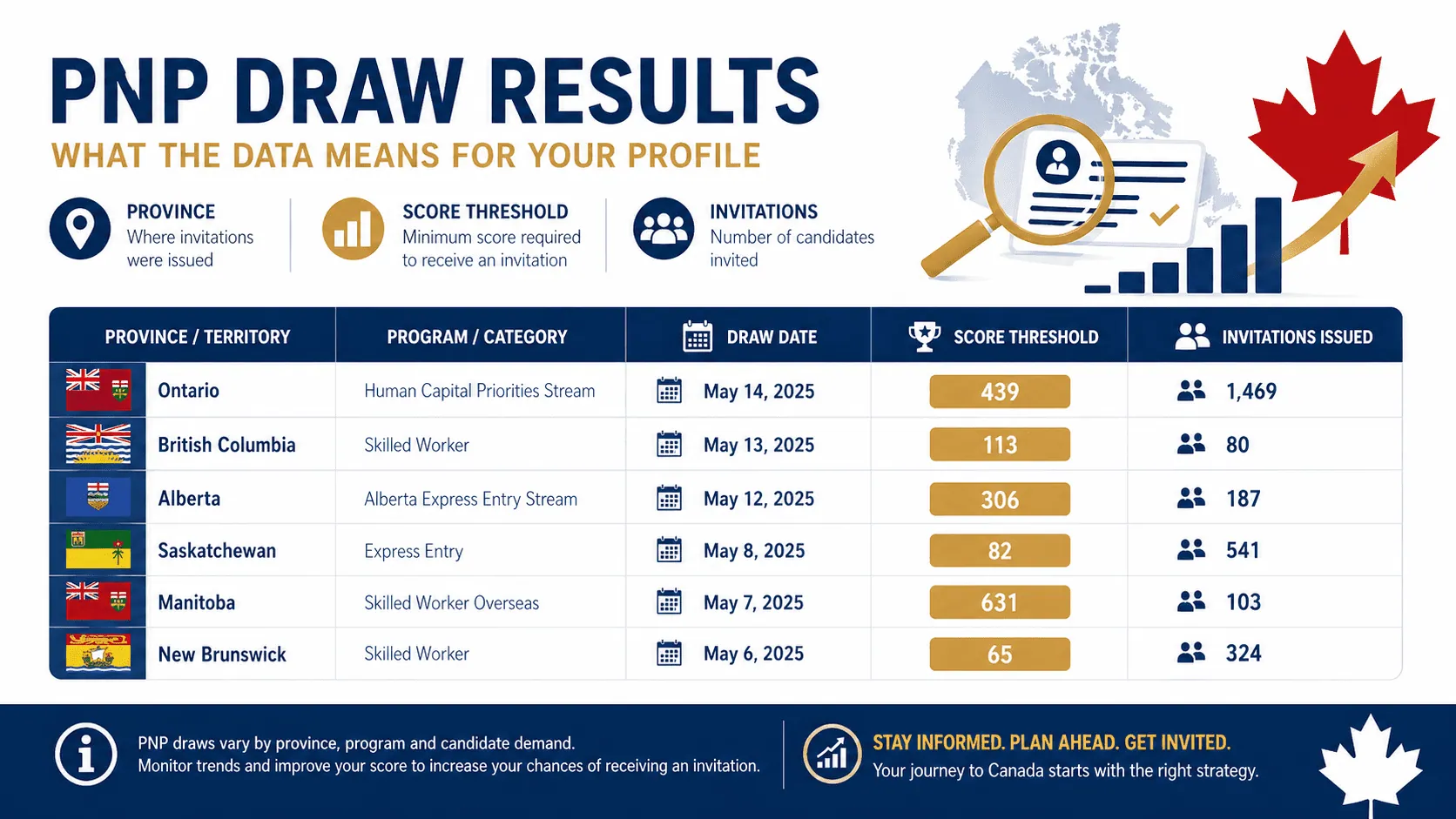
PNP draw results are published by provinces after each invitation round and contain information that is essential for any applicant targeting provincial nomination. Most applicants look at one number – the lowest score that received an invitation – and stop there. That single number is useful but incomplete. The full picture of pnp draw results includes the number of invitations issued, the occupations targeted, the stream category, and how the draw compares to previous rounds. Together, these data points tell you whether your profile is realistically competitive, which stream gives you the best odds, and whether the provincial program is trending toward or away from your profile type.
This article covers the five most critical facts about reading and using pnp draw results effectively.
What PNP Draw Results Actually Contain
Provincial pnp draw results vary in format and detail by province. BC PNP publishes detailed Skills Immigration registration draw results showing the score thresholds, invitation counts, and categories for each draw. Ontario PNP publishes Notification of Interest draw data showing the number of candidates notified and the CRS score range or profile criteria used. Other provinces publish varying levels of detail about their draw outcomes.
At minimum, pnp draw results typically show: the date of the draw, the stream or category targeted, the number of invitations issued, and the lowest score that received an invitation in that draw. Some provinces also publish the highest score, the average score, or additional criteria used to select candidates at the cutoff score.
For the broader framework of how PNP streams work and which provinces offer which types of streams, the Canada PNP complete guide covers the federal-provincial structure in detail. For comparing which province’s streams best match your profile, the best PNP programs Canada guide covers the five factors for provincial selection.
Fact 1 – The Cutoff Score Is a Result, Not a Threshold
The most important thing to understand about pnp draw results is that the lowest score that received an invitation is a result of the draw process – not a predetermined threshold. The province decides how many invitations to issue, then invites the highest-scoring candidates until that number is reached. The lowest score that gets an invitation in any given draw depends on how many candidates were in the pool at each score level.
This means the cutoff in pnp draw results fluctuates based on pool composition and invitation volume. A draw with fewer invitations produces a higher cutoff. A draw that depletes the highest-scoring candidates from previous draws may produce a lower cutoff in subsequent rounds. A specific occupation or language category draw targets a smaller subset of the pool, often producing a lower cutoff than general draws.
Reading a single pnp draw results data point and concluding that your score is above or below the threshold is premature. Reading the last ten draw results for your target stream and assessing where your score falls in that range gives you a much more reliable picture of your competitiveness.
Fact 2 – Invitation Volume Tells You as Much as the Cutoff Score
The number of invitations issued in each round of pnp draw results is as informative as the cutoff score. A draw that issued 500 invitations with a cutoff of 85 is very different from a draw that issued 50 invitations with the same cutoff of 85. The first draw pulled 500 candidates from the pool – creating space for a potentially lower cutoff in the next round. The second draw left most candidates in place.
Provinces that issue invitations frequently and in large numbers are generally more accessible for competitive candidates than provinces that issue invitations infrequently or in small batches. Monitoring the invitation volume trends in pnp draw results alongside the cutoff score gives you insight into how quickly the pool is moving and how soon candidates at your score level might reasonably expect an invitation.
Fact 3 – Category-Specific Draws Target Specific Profiles
Many provinces run category-specific draws that appear in pnp draw results with targeted occupation lists, language requirements, or other profile criteria. These targeted draws are often more accessible for qualifying candidates than general draws because they pull from a smaller subset of the overall registrant or pool population.
Ontario PNP regularly issues Notifications of Interest in waves targeting specific Express Entry pool profiles – often by occupation category or CRS score range. BC PNP runs separate draw categories for different occupational groups, with distinct score thresholds for each. Reading pnp draw results by category rather than just overall draw history gives you a more accurate picture of the cutoff relevant to your specific profile.
If your occupation qualifies for a targeted category draw, monitor that specific category’s pnp draw results separately from the general draw history. The cutoff that matters for your application is the one for the category you qualify for.
Fact 4 – Tie-Breaking Rules Affect Who Gets Invited at the Cutoff Score
When pnp draw results show a cutoff score, that cutoff applies to all candidates who scored above it. But for candidates who scored exactly at the cutoff, provinces typically apply a tie-breaking rule to determine which candidates at that score level receive invitations.
Common tie-breaking rules in pnp draw results include: profile submission date, with earlier submissions prioritized; language score, with higher scores prioritized; or a combination of factors. BC PNP explicitly uses registration date as the primary tie-breaker for Skills Immigration draws – candidates who registered earlier with the same score are invited before those who registered later.
Understanding the tie-breaking rule for your target stream matters if your score is near recent cutoff thresholds. If the cutoff is likely to be at or near your score, submitting your registration or Expression of Interest earlier gives you a better position for the tie-breaking round.
Fact 5 – PNP Draw Results Must Be Read Alongside Your Profile Expiry
Express Entry profiles expire after 12 months. BC PNP Skills Immigration registrations also expire. When reading pnp draw results to assess your timeline, you must consider whether your profile will still be valid when your score reaches or is reached by the provincial cutoff.
If your profile is six months from expiry and pnp draw results suggest that candidates at your score level typically wait eight to twelve months for an invitation, you face a practical decision: resubmit your profile before expiry to reset the clock, improve your score to reach invitation range faster, or pursue a different pathway. Reading pnp draw results without factoring in your profile expiry produces an optimistic timeline that may not account for the expiry constraint.
If you want a pre-submission review of your provincial application documents once you receive an invitation, the DIY Document Review service provides a structured assessment against both provincial and IRCC document standards.
FAQ
Where can I find PNP draw results for each province?
Each province publishes pnp draw results on its official provincial immigration authority website. BC PNP draw results are published at the BC PNP website. Ontario PNP results are at the OINP website. Other provinces publish on their respective immigration program pages. Results are typically published within days of each draw.
How often do provinces conduct PNP draws?
Draw frequency varies significantly by province and stream. Some provinces conduct draws weekly, others monthly, and some irregularly based on nomination target availability. BC PNP typically conducts Skills Immigration draws every two weeks. Ontario PNP issues Notifications of Interest on an ongoing basis without a fixed schedule. Monitor each province’s draw history to assess typical frequency.
What does it mean if my score is below the PNP draw results cutoff?
A score below recent pnp draw results cutoffs means you would not have received an invitation in those draws. It does not mean you will never receive one. Cutoffs fluctuate based on pool composition and invitation volume. You can also improve your score, target a different stream or category with lower cutoffs, or wait for pool dynamics to shift your score into invitation range.
Can PNP draw results predict future cutoff scores?
PNP draw results history provides context for likely future cutoff ranges but cannot predict exact future cutoffs. The cutoff in any draw depends on factors that change between draws – pool composition, invitation volume, and provincial nomination targets. Use draw history to assess the realistic range your score falls in, not to predict a specific future cutoff.
Do PNP draw results differ between Express Entry-linked and base streams?
Yes. Express Entry-linked stream pnp draw results show the CRS score range of Express Entry pool candidates who received Notifications of Interest. Base stream draw results show the provincial scoring system scores of direct applicants. These two systems are separate and scores are not comparable between them. Always verify which type of stream you are targeting when reading pnp draw results.
Final Thoughts
PNP draw results are data – and like all data, they are most useful when read systematically rather than selectively. The cutoff score matters. The invitation volume matters. The category targeted matters. The tie-breaking rule matters. And your profile expiry matters.
Reading ten consecutive pnp draw results for your target stream takes fifteen minutes and gives you a much more accurate picture of your provincial competitive position than reading a single recent draw. Build that habit into your provincial application strategy and use the data to make informed decisions about when to register, whether to improve your score, and which stream gives you the best realistic timeline.
This article is for educational purposes only and does not constitute legal or immigration advice. For guidance specific to your situation, consult a licensed RCIC or immigration lawyer.